
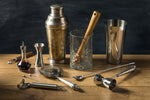
Bar tools for the hospitality industry: the 10 most important bar tools for every cocktail bar
, by Office APS, 6 min reading time
, by Office APS, 6 min reading time
A good cocktail bar isn't just about spirits and fresh ingredients. The true foundation of any professional bar lies in having the right bar tools for the hospitality industry.
With the right bar equipment, you work faster, more accurately, and create cocktails that have the same quality every time. For bars, restaurants, and hotels, good bar tools also ensure a more efficient workflow and a professional appearance behind the bar.
Whether you're opening a new bar or want to improve your current bar equipment, the right bar tools for a cocktail bar make all the difference.
In this guide, you'll discover the 10 most important bar tools every cocktail bar needs.
Making cocktails is precision work. The right tools ensure that bartenders can work efficiently and that every cocktail is prepared consistently.
Good bar tools for the hospitality industry ensure:
consistent cocktails
faster service during busy times
less ingredient waste
a professional appearance behind the bar
more comfort and job satisfaction for the bartender
For hospitality entrepreneurs, quality bar tools are therefore a smart investment.
The cocktail shaker is probably the most recognizable bar tool. With a shaker, ingredients are mixed, chilled, and diluted with ice.
In the hospitality industry, two types of shakers are mainly used.
Boston shaker
Consists of a metal shaker and a mixing glass. This type is widely used by professional bartenders because it works quickly and efficiently.
Cobbler shaker
Consists of three parts: a shaker, a built-in strainer, and a cap. This type is popular in smaller bars or among novice bartenders.
Cocktails that are often shaken include Margarita, Daiquiri, Espresso Martini, and Whiskey Sour.
A jigger is a small measuring cup that allows bartenders to precisely measure ingredients.
Cocktails are all about balance. A small deviation in the amount of alcohol or syrup can already change the taste.
Common jigger sizes include:
20 ml and 40 ml
25 ml and 50 ml
30 ml and 60 ml
For professional cocktail bars, a jigger is therefore indispensable.
The bar spoon is a long spoon specially designed for stirring cocktails.
Its long handle allows you to easily stir in mixing glasses or tall glasses without breaking the ice.
The bar spoon is often used for cocktails such as:
Negroni
Martini
Manhattan
Old Fashioned
Additionally, the bar spoon can also be used for making layered cocktails.
A strainer is used to filter ice and ingredients when pouring a cocktail from a shaker or mixing glass.
The most commonly used variant in cocktail bars is the Hawthorne strainer. It has a metal spring that holds back ice and large ingredients.
Many bartenders also use a fine strainer for extra fine filtering.
A mixing glass is used for cocktails that are stirred rather than shaken.
Stirring keeps cocktails clear and gives them a different texture than if they were shaken.
Cocktails often made in a mixing glass include:
Martini
Manhattan
Negroni
Boulevardier
Mixing glasses are usually made of thick glass and have a pouring spout for accurate pouring.
A muddler is used to crush ingredients such as fruit, herbs, and sugar to release their flavors.
This process is called muddling.
A muddler is often used for cocktails such as:
Mojito
Caipirinha
Old Fashioned
A good muddler has a firm grip and a flat or slightly textured end.
Ice is an essential ingredient in almost every cocktail. With an ice scoop, a bartender can quickly and hygienically scoop ice from an ice bucket.
In professional bars, ice is never handled by hand.
An ice scoop ensures:
better hygiene
faster work behind the bar
less meltwater in the ice bucket
Many cocktails contain fresh citrus juice. A citrus juicer easily extracts the maximum juice from limes and lemons.
Fresh juice makes a big difference in cocktails.
It provides:
more freshness
better balance
higher quality cocktail
For cocktails like Margarita, Daiquiri, and Whiskey Sour, a citrus juicer is therefore essential.
A bottle pourer is placed on liquor bottles to allow bartenders to pour quickly and controllably.
Advantages of bottle pourers include:
faster work behind the bar
accurate pouring
less spillage
consistent quantities
In busy cocktail bars, this can make a big difference in efficiency.
A bar mat is placed on the bar and catches spilled drinks while making cocktails.
This ensures:
a cleaner workspace
less sticky bar tops
more grip for glasses and shakers
Bar mats are usually made of rubber and are easy to clean.
With these ten bar tools, almost any cocktail can be made professionally.
The basic equipment for a cocktail bar consists of:
cocktail shaker
jigger
bar spoon
strainer
mixing glass
muddler
ice scoop
citrus juicer
bottle pourer
bar mat
With these tools, a bartender can work efficiently and serve cocktails consistently.
Good bar tools for the hospitality industry should not only be attractive but also durable, ergonomic, and suitable for intensive use.
At Nonfoodcompany, you'll find a complete range of professional bar tools for cocktail bars, restaurants, and hotels. From cocktail shakers and jiggers to strainers and mixing glasses.
With the right bar equipment, you work more efficiently, make better cocktails, and give your bar a professional look.
View the full range of bar tools and elevate your cocktail bar to a higher level.


